

Who is the richest person in the world? This question fascinates people worldwide because wealth represents not just money but power, influence, and innovation. In 2025, the global billionaire rankings show a world where some individuals own more wealth than entire countries.
According to the latest Forbes Billionaires List, Elon Musk has once again topped the rankings. His net worth stands at an astonishing $433.9 billion. This figure is hard to imagine but highlights how technological advancements and market trends create immense wealth. Elon Musk’s businesses, like Tesla, SpaceX, and AI-focused ventures, have been instrumental in his rise to the top.
But wealth doesn’t just grow in one place. In 2025, the United States has the most billionaires, followed by China and India. The tech industry dominates these rankings, showing how innovation drives fortune. Other industries, like luxury goods and e-commerce, also play a role.
Understanding this list helps us see how the world works. It’s not just about who is richest- it’s about the industries, innovations, and decisions shaping their success.
The Global Billionaire Landscape in 2025
The world of billionaires in 2025 has reached extraordinary heights. According to the Forbes Billionaires List, the combined wealth of the top 500 richest individuals has surpassed $10 trillion – a figure so vast that it exceeds the GDP of many countries. But how did we get here?
The rise in billionaire wealth can largely be attributed to the technology sector. Companies like Tesla, Amazon, and Nvidia have seen massive growth, driving the wealth of their founders. For example, Elon Musk’s fortune skyrocketed due to Tesla’s market dominance and SpaceX’s groundbreaking valuation of $350 billion. Similarly, Jeff Bezos, founder of Amazon, holds second place on the billionaire list with a net worth of $239.4 billion, thanks to Amazon’s global e-commerce success.
While technology leads the way, luxury goods have also made their mark. Bernard Arnault, head of LVMH, represents the growing influence of the luxury sector. His wealth of $181.3 billion reflects the continued demand for high-end products like Louis Vuitton and Dior.
Another factor behind the wealth surge is the rise in stock valuations. The Bloomberg Billionaires Index reports that tech moguls alone contributed $600 billion to the $1.5 trillion increase in total billionaire wealth. This underscores the close link between market performance and personal fortunes.
The 2025 billionaire landscape is not just about money reflects the global economy’s direction. Sectors like technology, luxury goods, and e-commerce are driving innovation and wealth creation on an unprecedented scale.
Who is the Richest Person in the World in 2025?
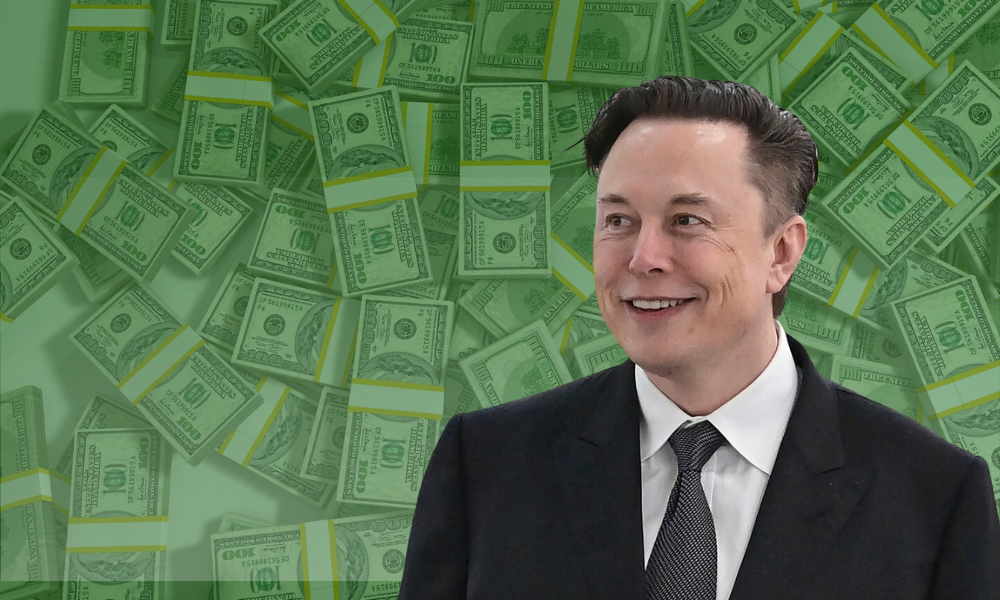
In 2025, Elon Musk retains the title of the richest person in the world, with a staggering net worth of $433.9 billion. Musk’s wealth story is tied closely to his ventures in space exploration, electric vehicles, and artificial intelligence. His achievements highlight how technological innovation can generate unimaginable wealth.
Musk’s success is primarily driven by two major companies: Tesla and SpaceX. Tesla, the leader in electric vehicles, dominates the market with a valuation of over $1 trillion. This success is a result of increasing global demand for sustainable energy solutions. SpaceX, valued at $350 billion, is the most valuable private company in the world, thanks to its groundbreaking reusable rocket technology.
Musk also owns stakes in other ventures, including the AI company xAI and the tunneling startup Boring Co., further diversifying his portfolio. His vision for the future includes colonizing Mars and creating a sustainable Earth, which keeps him in the public eye as a visionary leader.
One remarkable aspect of Musk’s wealth is its fluctuation. Since December 2024, his net worth increased by $91 billion due to rising valuations of SpaceX and Tesla. However, his fortune, like those of other billionaires, is tied to stock prices, making it highly volatile.
While Musk leads the pack, other billionaires like Jeff Bezos, Mark Zuckerberg, and Bernard Arnault follow closely. Each represents different industries and business models, showing that wealth creation comes from diverse sources.
Musk’s achievements highlight not only the potential of emerging industries but also the risks and rewards of ambitious innovation. His position at the top reflects the profound impact of technology on global wealth distribution.
The Rising Stars: Key Billionaires Reshaping the Rankings
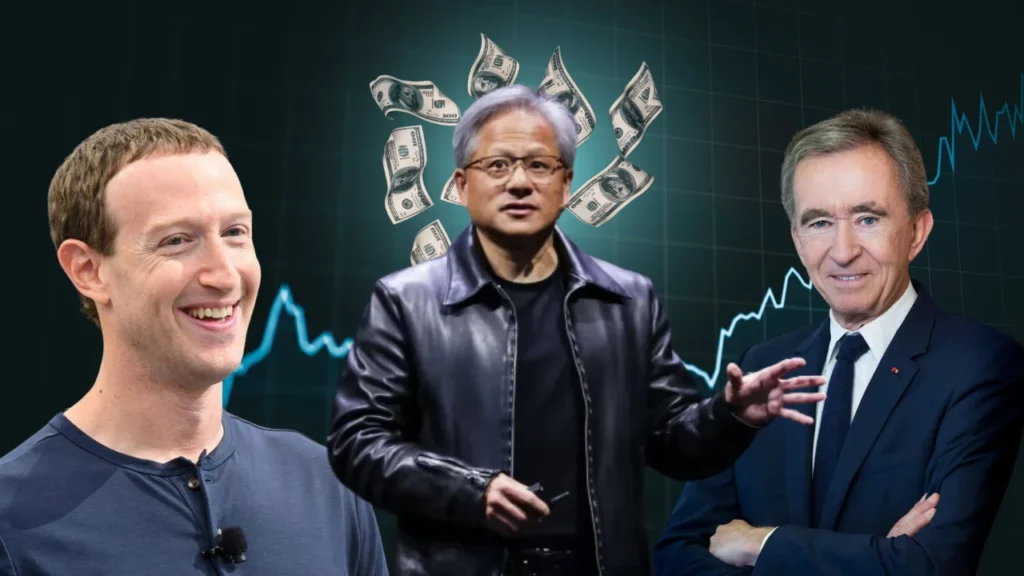
While Elon Musk dominates the list, other billionaires are rapidly climbing the ranks and reshaping the global wealth landscape in 2025. These individuals demonstrate how innovation, strategic investment, and emerging markets drive wealth growth.
Mark Zuckerberg: Tech’s Resilient Player
Mark Zuckerberg, the founder of Meta (formerly Facebook), has secured the third spot on the Forbes Billionaires List 2025 with a net worth of $211.8 billion. This milestone comes after Meta’s stock surged by 4% in early 2025, driven by advancements in artificial intelligence and the company’s continued dominance in social media. Zuckerberg’s wealth growth underscores the value of adapting to market changes and investing in cutting-edge technologies.
Jensen Huang: Nvidia’s Trailblazer
For the first time, Jensen Huang, CEO of Nvidia, has entered the top 10 richest individuals, ranking 10th with a net worth of $120.2 billion. Nvidia’s impressive 171% stock surge in 2024, fueled by the demand for AI and graphics processing units, contributed significantly to Huang’s fortune. Nvidia’s groundbreaking technologies are now essential for industries like gaming, AI, and cloud computing, demonstrating how innovation can propel new players into the billionaire ranks.
Bernard Arnault: The Power of Luxury
Bernard Arnault, head of LVMH, continues to show how traditional industries like luxury goods can compete with tech giants. With a net worth of $181.3 billion, Arnault represents a sector that thrives on exclusivity, branding, and high-income consumers.
These billionaires highlight how diverse industries—from technology to luxury goods-drive economic transformation. Their success stories reflect individual achievements and the shifting priorities of consumers and markets worldwide.
What Drives Billionaire Wealth? Understanding the Key Factors
The wealth of the world’s richest people isn’t just about luck or inheritance. It’s the result of specific factors that contribute to building and sustaining immense fortunes. In 2025, several key drivers explain how billionaires like Elon Musk, Mark Zuckerberg, and Jensen Huang amassed their wealth.
1. Innovation and Technology
Technology continues to dominate the list of wealth-building industries. For instance, Elon Musk’s Tesla revolutionized electric vehicles, and SpaceX broke barriers in private space exploration. Similarly, Jensen Huang’s Nvidia has become essential in AI and gaming sectors. These leaders show that technological advancements are a major driver of wealth creation.
2. Strategic Investments
Successful billionaires often diversify their portfolios. Jeff Bezos, the founder of Amazon, has invested in space exploration (Blue Origin), media (The Washington Post), and various startups, allowing his wealth to grow beyond Amazon. Mark Zuckerberg, too, has expanded Meta’s influence into virtual reality and artificial intelligence, creating new revenue streams.
3. Market Influence
A significant portion of billionaire wealth is tied to stock valuations. For example, Bernard Arnault’s fortune is linked to LVMH, which thrives on consumer confidence and luxury spending. Rising or falling stock prices can dramatically impact these individuals’ net worth.
4. Emerging Markets
Countries like India and China are becoming global economic powerhouses, with a growing number of billionaires. This trend reflects the role of emerging markets in creating wealth, especially in industries like technology, e-commerce, and real estate.
5. Visionary Leadership
A common trait among billionaires is their ability to foresee market trends and take risks. Their decisions to innovate, invest, or expand into new areas often set them apart from others in their industries.
The Role of Global Markets in Shaping Billionaire Wealth
Global economic trends play a critical role in determining the wealth of the richest individuals. The fortunes of billionaires often mirror the highs and lows of the world’s markets, making economic shifts a vital part of their financial story.
1. Stock Market Dynamics
A large portion of billionaire wealth is tied to publicly traded stocks. For instance, Elon Musk’s net worth surged as Tesla’s valuation soared, driven by investor confidence and rising demand for electric vehicles. Similarly, Jensen Huang’s entry into the top 10 richest was fueled by Nvidia’s 171% stock price increase in 2024, underscoring how market performance directly impacts billionaire rankings.
2. The Technology Sector’s Dominance
The tech sector continues to lead wealth creation globally. Companies like Amazon, Google, and Meta thrive on the increasing digitalization of daily life. Their founders—Jeff Bezos, Larry Page, and Mark Zuckerberg—have benefited from this trend, as technology stocks remain investor favorites.
3. Regional Contributions to Wealth
The United States remains the top contributor to the global billionaire population, with 813 billionaires in 2025. Emerging economies like China and India also play a growing role, with 473 and 200 billionaires respectively. These regions reflect the rise of new industries, such as e-commerce in Asia, which has produced several self-made billionaires.
4. Commodities and Luxury Sectors
Traditional industries like luxury goods and commodities are still significant. Bernard Arnault’s LVMH and Warren Buffett’s Berkshire Hathaway demonstrate the enduring value of established markets. These sectors rely on consumer spending, particularly from affluent demographics, to sustain their growth.
5. Global Challenges and Opportunities
Economic challenges such as inflation, geopolitical tensions, and energy crises impact billionaire wealth. At the same time, opportunities in renewable energy, artificial intelligence, and space exploration create new avenues for wealth creation.
Global markets are a powerful force shaping billionaire wealth, reflecting both the risks and rewards of navigating an interconnected economy.
How the Richest People Influence the Global Economy
The world’s richest individuals hold significant sway over the global economy. Their decisions influence industries, markets, and even governmental policies. This section explores how billionaires contribute to economic growth and shape the future.
1. Innovation and Industry Leadership
Billionaires like Elon Musk and Jensen Huang lead industries through groundbreaking innovations. Musk’s ventures in electric vehicles (Tesla) and space exploration (SpaceX) have disrupted traditional markets, creating new job opportunities and industries. Similarly, Huang’s Nvidia has revolutionized AI and graphics technology, powering advancements across multiple sectors.
2. Investments That Drive Growth
Billionaires are major investors in startups and emerging technologies. Jeff Bezos, through his venture capital firm Bezos Expeditions, has supported companies in sectors like health tech, logistics, and renewable energy. Such investments spur innovation, create jobs, and stimulate economic activity.
3. Philanthropy and Social Impact
Many of the richest people engage in philanthropy to address global challenges. For instance, Bill Gates has donated billions through the Gates Foundation to improve healthcare and education worldwide. Similarly, Warren Buffett has pledged a significant portion of his wealth to charitable causes, emphasizing social responsibility.
4. Market Influence
The financial moves of billionaires can shift markets. For example, when tech leaders like Mark Zuckerberg or Larry Ellison announce strategic decisions, it often causes significant fluctuations in stock prices. Their influence extends to global investor confidence, which affects economies worldwide.
5. Policy and Economic Frameworks
Through lobbying and advisory roles, billionaires influence public policy. For instance, initiatives in renewable energy or AI often align with the interests of tech moguls, encouraging governments to adopt future-focused strategies.
The Top 10 Richest People in the World for 2025
The Forbes 2025 Billionaires list reveals the individuals who have reached extraordinary heights in wealth. As of January 2025, the top 10 richest people in the world have amassed fortunes in the hundreds of billions, with the combined wealth of these 10 billionaires exceeding $1.5 trillion. Here is a closer look at the wealthiest individuals globally.
1. Elon Musk
Elon Musk tops the list with a staggering net worth of $433.9 billion. His wealth is primarily driven by Tesla and SpaceX, both of which have experienced immense growth. Tesla’s success in the electric vehicle market and SpaceX’s advancements in space exploration have placed Musk at the forefront of the richest people in the world.
2. Jeff Bezos
Jeff Bezos, founder of Amazon, holds the second spot with $239.4 billion. His vast fortune comes from his e-commerce giant Amazon, which revolutionized global retail. Bezos’s ventures beyond Amazon, including Blue Origin, a private space exploration company, have also contributed to his wealth.
3. Mark Zuckerberg
Mark Zuckerberg, the co-founder of Meta (formerly Facebook), is the third richest person globally with a net worth of $211.8 billion. His wealth is largely linked to Meta’s social media dominance, but Zuckerberg has also ventured into the world of virtual reality and artificial intelligence, significantly increasing his fortune.
4. Larry Ellison
Larry Ellison, the co-founder of Oracle, has a net worth of $204.6 billion, securing his position as the fourth richest person. Oracle’s dominance in enterprise software and cloud services has been central to Ellison’s wealth.
5. Bernard Arnault & Family
The French luxury goods magnate, Bernard Arnault, rounds out the top five with $181.3 billion. Arnault’s wealth is derived from his ownership of LVMH, a conglomerate of luxury brands, including Louis Vuitton, Moët & Chandon, and Dior. The growth of the luxury market has helped his wealth surge.
6. Larry Page
Larry Page, the co-founder of Google, has a net worth of $161.4 billion. Google’s dominance in search engines and advertising, combined with ventures into AI and self-driving cars, has made Page one of the wealthiest individuals in the world.
7. Sergey Brin
Sergey Brin, also a co-founder of Google, follows Page with a net worth of $154.0 billion. His wealth is similarly tied to Google and its ongoing innovations in technology and AI.
8. Warren Buffett
Warren Buffett, the chairman of Berkshire Hathaway, has amassed a fortune of $146.2 billion. Known for his investing prowess, Buffett’s wealth grows from smart investments in a variety of industries, from insurance to energy and consumer goods.
9. Steve Ballmer
Steve Ballmer, the former CEO of Microsoft, is in ninth place with $126.0 billion. His wealth is linked to Microsoft’s success, as well as his ownership of the Los Angeles Clippers basketball team.
10. Jensen Huang
Jensen Huang, the CEO of Nvidia, rounds out the top 10 with a net worth of $120.2 billion. Nvidia’s success in graphics processing units (GPUs) and its role in AI and gaming technology has significantly boosted Huang’s fortune.
Factors That Contribute to the Wealth of the Richest People
The wealth of the world’s richest individuals is not just a result of luck but rather a combination of strategic decisions, market conditions, and innovation. Here are the key factors that contribute to the success and enormous fortunes of the wealthiest people globally.
1. Entrepreneurship and Innovation
At the heart of many billionaires’ wealth lies entrepreneurship and a deep commitment to innovation. Elon Musk’s ventures with Tesla and SpaceX, as well as Mark Zuckerberg’s creation of Facebook, demonstrate the power of starting groundbreaking companies. These entrepreneurs took risks, often in untested markets, and revolutionized entire industries.
2. Investment Strategies
Wealthy individuals like Warren Buffett and Larry Ellison have amassed their fortunes through smart investment strategies. Buffett’s philosophy of value investing and Ellison’s focus on high-growth technology stocks are prime examples of how investment decisions can lead to long-term financial success. By identifying undervalued assets and making strategic moves, these billionaires have grown their wealth exponentially.
3. Technology Dominance
Technology has played a massive role in the rise of many of the richest people. The continued growth of companies like Google, Amazon, and Tesla has been a major factor in the wealth of their founders. The tech sector’s high returns, scalability, and global reach make it a prime area for wealth accumulation. The rise of artificial intelligence (AI), blockchain technology, and renewable energy presents new opportunities for future billionaires.
4. Diversification of Assets
Many billionaires build their wealth by diversifying their assets. For example, Jeff Bezos invested in Blue Origin (a space exploration company) and other ventures, which increased his fortune. Similarly, Larry Page and Sergey Brin expanded Google into a multi-faceted business, leading to higher returns. By diversifying their portfolios, these billionaires reduce risk and increase their potential for wealth accumulation.
5. Market and Timing
Another critical factor in wealth accumulation is market timing. Being in the right place at the right time can make a huge difference. The rise of tech stocks and e-commerce during the past few decades has created an environment where billionaires could thrive. Timing is everything in business, and the wealthiest people know how to capitalize on the right trends.
These factors combined create a powerful formula for financial success, explaining how the richest people have grown their fortunes. Their achievements provide valuable lessons for aspiring entrepreneurs and investors worldwide.
The Impact of Global Markets on the Richest People
The wealth of the richest people is deeply intertwined with global market trends and economic conditions. These billionaires often rely on market forces to grow their fortunes, and their wealth can be significantly affected by shifts in both national and international markets. Here’s a look at how global markets shape the wealth of the richest people.
1. Stock Market Trends
A significant portion of the wealth of the richest individuals is tied to the performance of publicly traded stocks. Elon Musk’s wealth, for example, is largely tied to the stock prices of Tesla and SpaceX, both of which are subject to market fluctuations. The performance of technology stocks like those of Amazon and Meta can cause dramatic changes in the net worth of individuals like Jeff Bezos and Mark Zuckerberg. Positive market sentiment can result in wealth surges, while market downturns can also lead to significant losses.
2. International Trade and Supply Chains
Global trade agreements and the smooth operation of supply chains also play a significant role in the financial success of billionaires. For example, Jeff Bezos’s Amazon relies heavily on international supply chains and shipping networks, which make up a key part of the company’s global reach. The flow of goods and services across borders allows companies to scale efficiently, increasing profitability and, in turn, the wealth of their owners.
3. Currency Fluctuations and Economic Policies
Currency exchange rates and economic policies in different countries can impact the wealth of the richest people. For example, a strong US dollar can make international revenue more valuable for American billionaires like Elon Musk and Larry Ellison. Additionally, government policies, tax regulations, and fiscal decisions affect how much billionaires can accumulate from their businesses. Policies that favor businesses, such as tax cuts or deregulation, can contribute to growth, while higher taxes and stricter regulations can reduce wealth accumulation.
4. Geopolitical Events and Stability
Geopolitical events, such as conflicts, changes in leadership, and international sanctions, can also affect the global markets and, consequently, the wealth of the richest people. Political instability or economic crises can lead to market crashes, while stable geopolitical conditions help companies thrive and grow.
Frequently Asked Questions (FAQs)
Who is the richest person in the world in 2025?
Elon Musk is the richest person in the world in 2025, with a net worth of $433.9 billion.
How did Elon Musk become the richest person in the world?
Musk’s wealth primarily comes from Tesla, SpaceX, and his investments in AI and technology companies.
Who are the top 10 richest people in the world in 2025?
The list includes Elon Musk, Jeff Bezos, Mark Zuckerberg, Larry Ellison, Bernard Arnault, Larry Page, Sergey Brin, Warren Buffett, Steve Ballmer, and Jensen Huang.
Which industries dominate billionaire rankings in 2025?
The tech industry leads, followed by luxury goods, e-commerce, and AI.
How does Forbes calculate billionaire rankings?
Forbes bases its rankings on real-time data, tracking publicly traded stocks, private investments, and other assets.
Final Words
The Forbes 2025 Billionaires List reveals the world’s wealthiest individuals. Wealth continues to evolve, impacting the rankings. The top billionaire’s journey inspires many. Financial landscapes shift; staying informed is key. Keep an eye on future lists for changes. Wealth stories can teach us valuable lessons.
Stay curious about the world’s richest people. Their stories offer insights into success. Thanks for exploring the 2025 Billionaires List with us.

Leave a Reply